If you’re trying to select gravel for your next building project, consider rice gravel.
Available at these locations:
Belvedere Plant Map it
Cecil Plant Map it
Perryville Plant Map it


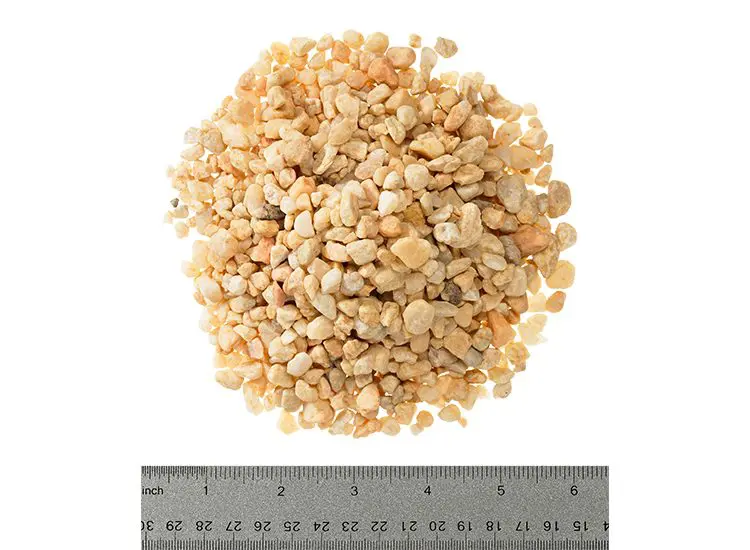


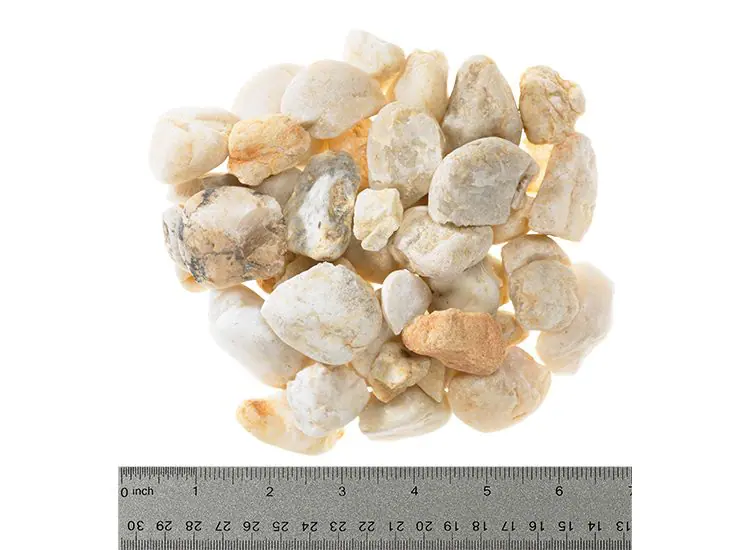
Smaller gravel with a nominal size of 3/8”. Used in the manufacturing of block and pavers. Also used as landscape cover, garden path material, and in retention basins. Named for its resemblance to grains of rice, this multipurpose, affordable aggregate is suited for a wide range of jobs.
If you’re trying to select gravel for your next building project, consider rice gravel.
Available at these locations:
Belvedere Plant Map it
Cecil Plant Map it
Perryville Plant Map it
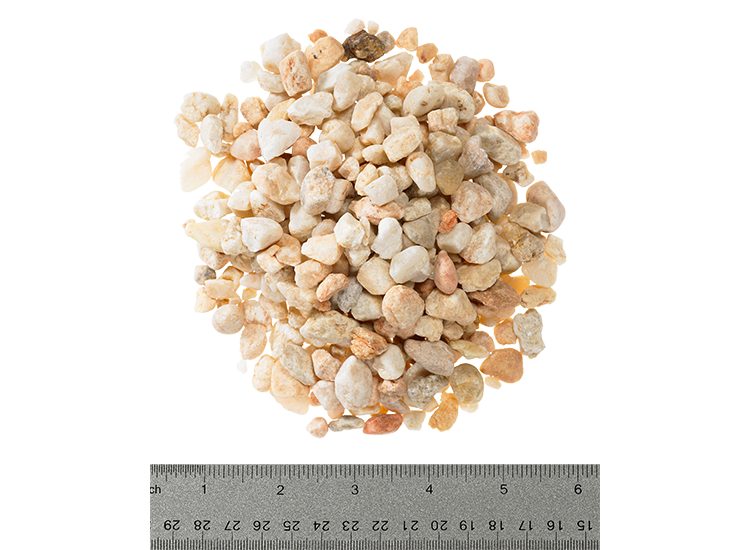
This versatile material is made from sand & gravel production. It can be used as underlayment and filler material for patios or as part of the patio stones themselves. Its compact and round grain size sets it apart from traditional crushed limestone, making it functional and decorative.
Rice gravel is normally around 3/8 inch, making it highly versatile. Mix it with other gravels to create patterns and textures in landscaping projects, or use it for weed suppression since the gaps between stones are smaller than with larger gravel types.
Rice gravel can be used alone or combined with other materials to create additional building products. Some of its common applications include:
York Building Products is a family-owned business that has provided quality products to our customers since 1939. In addition to unmatched experience, working with us has several other advantages:
Whether you’re looking to buy rice gravel in bulk or one of our other aggregate products, our decades in the business have allowed us to build plants and form partnerships that provide a large selection of products to our customers. We offer masonry supplies, sand, stone and a variety of gravel products.
Our products undergo extensive testing and comply with standards set by the American Association of State Highway and Transportation Officials (AASHTP) and the American Society for Testing Materials (ASTM).
We don’t want to just meet your expectations — we want to exceed them. We build trust with our clients through our dedication to customer service and our commitment to providing the highest quality products every time.
We prioritize safety in our plants, ensuring the protection of our employees and reducing employee turnover. Our aggregate plants have won multiple zero-incident safety awards from the Occupational Safety and Health Administration (OSHA) and safety awards from the Pennsylvania Concrete Masonry Association.
Learn more about rice gravel, from its unique characteristics to its maintenance needs, in these FAQs.
The main difference between rice gravel and pea gravel comes from how they are formed. Rice gravel is a by-product of sand and gravel production, while pea gravel is formed naturally through weathering and erosion of river rocks. Both processes result in small, rounded aggregates, but rice gravel tends to have slightly sharper edges compared to pea gravel, which has its edges softened by water flow.
The ideal depth for rice gravel installation will vary depending on the application. For landscape cover or beds, rice gravel around 3/8 inches needs to be installed at a depth of 4 inches. A depth of 2 to 3 inches is usually ideal for garden paths. When used in drainage systems or as a permeable base, a minimum depth of 4 inches is recommended for effective water flow and filtration.
Yes, rice gravel is generally good for drainage and water management projects, particularly filtration in retention basins and pipe bedding. Rice gravel’s smaller stones interlock tightly to form a drainage layer that filters out debris and sediment. It also has enough void spaces between the stones to allow water to trickle through steadily as it drains.
It’s important to keep in mind that rice gravel may be too small to handle larger water management projects that involve heavy, rushing water or high-volume drainage needs.
Rice gravel can compact well and provide a steady pathway. The irregular edges can interlock tightly to create a reasonably stable surface for light-use pathways like garden paths.
Rice gravel requires several maintenance tasks over time, including regular raking, weed control, debris removal, routine edge checking and adding new gravel every few years.
At York Building Products, we offer a wide selection of sand and gravel products. Our team of experts can advise you on the right materials for your projects and answer any additional questions you may have. Contact us today for more information or to find a dealer in your area.


 717.870.8996